
● In Stock
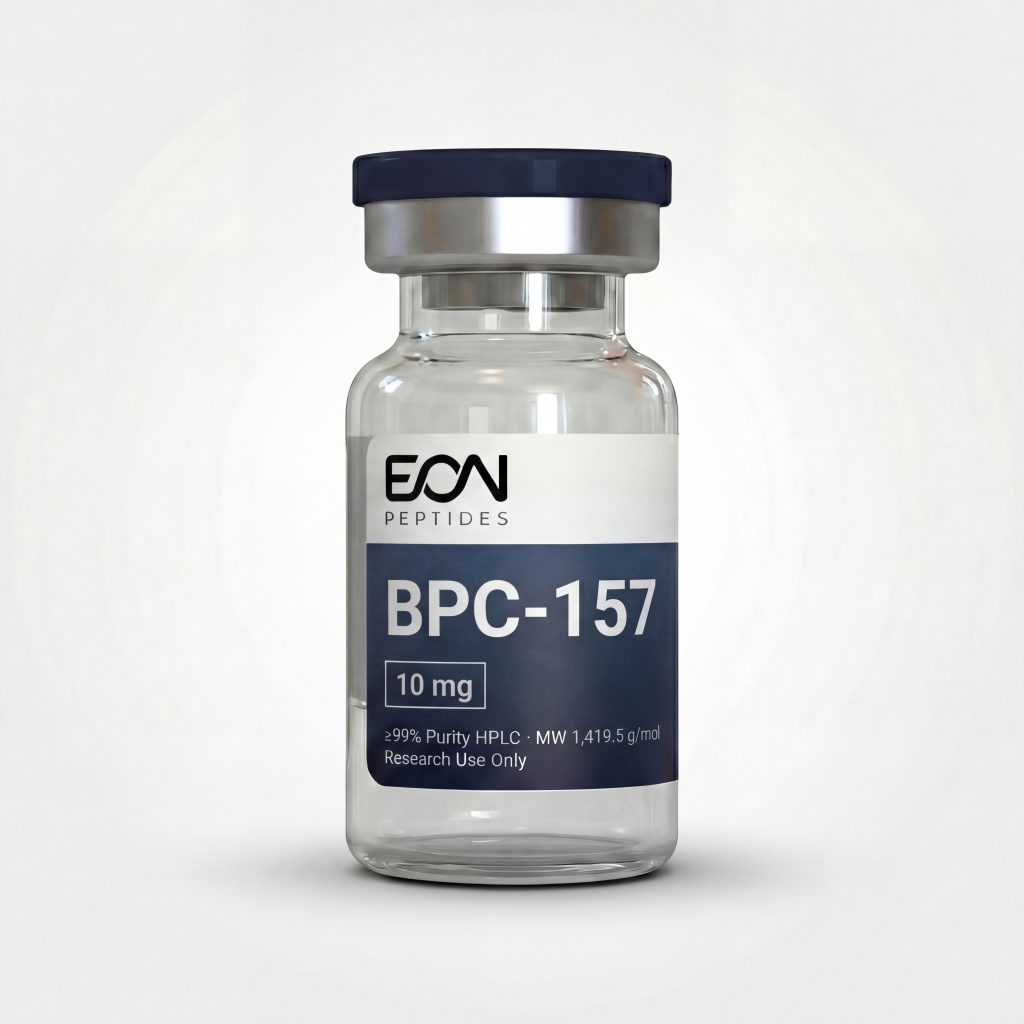
BPC-157
≥99% Purity | HPLC Verified
$40.00
PASSED
Sterility & Endotoxins
PASSED
Net Content & Purity
CAS:
137525-51-0
MW:
1419.53 g/mol
Purity:
≥99%
Store at
-20°C
BPC-157 lyophilized pentadecapeptide studied for tissue repair and cytoprotection in preclinical research. Research use only.
| Select Size: | 10mg, 20mg |
| Strength | 10mg |
| Purity | >99% (HPLC) |
🧬 The Science, Simplified
How BPC-157 Works
BPC-157 works through several interconnected biological pathways that promote healing and tissue repair. It activates cellular repair mechanisms, promotes blood vessel formation, and modulates inflammation — creating an optimal environment for tissue regeneration.
VEGF
VEGFR2 Pathway Primary
Vascular Endothelial Growth Factor Receptor 2
- Promotes new blood vessel formation
- Increases blood flow to injured areas
- Activates endothelial cell proliferation
NO
Nitric Oxide System Modulatory
eNOS/Nitric Oxide Signaling
- Dilates blood vessels
- Improves oxygen delivery
- Protects against ischemia
GF
Growth Factor Pathways Supportive
FAK-paxillin, JAK-2, ERK1/2
- Enables cell migration to injury sites
- Promotes cell survival and growth
- Activates tissue repair genes
Key Mechanism
VEGFR2-Akt-eNOS Signaling Cascade
BPC-157 activates the VEGFR2 pathway, promoting receptor internalization and downstream signaling. This triggers the Akt-eNOS cascade, increasing nitric oxide production and new blood vessel formation (angiogenesis) at injury sites.
J Mol Med (2017): BPC-157 upregulates VEGFR2 expression, promotes receptor internalization, and activates VEGFR2-Akt-eNOS signaling — accelerating blood flow recovery in ischemic tissue models.
VEGFR2 Expression↑ Upregulated
Receptor Internalization↑ Enhanced
Akt PhosphorylationTime-dependent
eNOS ActivationIncreased NO
Growth Pathway
GHR Upregulation & Tissue Repair
BPC-157 significantly increases Growth Hormone Receptor (GHR) expression, amplifying the body’s natural regenerative signaling. This enhanced GHR activity contributes to accelerated tissue repair and recovery.
Key finding: GHR expression increased 7-fold by day 3 in treated tissue, suggesting BPC-157 primes cells for enhanced growth factor responsiveness.
GHR Expression (Day 3)7x increase
FAK Phosphorylation↑ Dose-dependent
Paxillin Activation↑ Enhanced
Cell Migration70% faster
📊 Summary of Findings
What Research Has Shown
Summary of preclinical and early clinical findings
7/12
Primary Endpoint
Patients Reported Pain Relief >6 Months
Only human study to date · Knee osteoarthritis trial
58%
Pain relief >6 months
Human knee study (n=12)
100%
No toxicity observed
All preclinical studies
92%
Positive outcomes
In musculoskeletal models
⚠ Important: Most evidence comes from preclinical (animal) studies. Human data is limited to one small study. Results require validation in larger clinical trials.
Key Preclinical Findings
2025 Systematic Review (36 Studies)
Observed Effects in Preclinical Models
Healing Time Reduction
vs Untreated Controls
🔬 Areas Studied
Research Applications
Areas studied in preclinical research
💉 Musculoskeletal
Tendon, Ligament & Muscle Healing
Preclinical studies show significant improvements in tissue repair markers vs untreated controls.
Key finding: BPC-157 activates FAK-paxillin signaling pathway, promoting cell migration and tissue outgrowth in tendon explant models.
🍕 Gastrointestinal
Gut Protection & Healing
Originally isolated from gastric juice, BPC-157 has been extensively studied for GI applications.
Gastric Ulcers↑ Accelerated healing
Colitis Models↑ Reduced inflammation
Fistula Healing↑ Improved closure
Intestinal Anastomosis↑ Enhanced repair
Stable in gastric acid for 24+ hours
🧠 Neuroprotection
Brain & Nervous System
Brain-Gut
Axis modulation studied
Observed effects: Modulates serotonin and dopamine systems; reduced brain damage in TBI models; improved spinal cord injury outcomes in rats.
🧬 Research Combinations
Complementary Peptide Mechanisms
Research suggests BPC-157 and TB-500 work through different but complementary pathways.
BPC-157 PrimaryVEGFR2/Angiogenesis
TB-500 PrimaryActin/Cell motility
OverlapBoth reduce inflammation
Combined useStudied in animal models
Research context: The combination has been called “Wolverine blend” in research circles due to observed synergistic healing effects in preclinical studies.
🛡 From Preclinical Studies
Safety Profile from Research
BPC-157 has demonstrated a favorable safety profile in preclinical studies, with no significant toxicity observed across multiple animal species. However, human clinical data remains very limited, and the compound is not FDA approved.
Mild irritation at injection site — most commonly reported
Severity: Mild
Occasional mild GI symptoms with oral administration
Severity: Mild
⚠ Theoretical Concerns
Potential risks requiring further investigation
Because BPC-157 promotes angiogenesis (blood vessel growth), there are theoretical concerns about potential effects on tumor growth. This has not been studied and remains speculative.
- Pro-angiogenic effects could theoretically affect tumors
- No cancer studies have been conducted
- Long-term effects in humans unknown
- Not approved by FDA or any regulatory agency
Preclinical Safety Summary
Toxicology Overview
LD50Not achieved
Acute toxicityNone observed
Chronic toxicityNone in 6-month studies
Organ toxicityNone detected
✓ No lethal dose was reached in preclinical toxicology studies.
✓ No adverse effects on cardiac, hepatic, renal, or reproductive systems.
✓ Human IV pilot study (10–20mg) showed no adverse effects on biomarkers.
⚠ Important Considerations
What You Should Know
- Not FDA approved for any indication
- Banned by WADA since 2022 (S0 category)
- Limited human clinical trial data
- Long-term safety unknown
- Quality control issues with unregulated products
- Not studied in pregnant or breastfeeding individuals
Regulatory Status
• Classified as unapproved drug by FDA
• On DoD Prohibited Dietary Supplement list
• Prescription-only in Australia and New Zealand
• Not available through legitimate prescriptions
💊
Compound Information
Technical specifications
🧪 Molecular Profile
What Is BPC-157?
TypeSynthetic pentadecapeptide
CAS Number137525-51-0
Molecular Weight1419.5 g/mol
Amino Acids15
SequenceGEPPPGKPADDAGLV
FormulaC62H98N16O22
❄ Storage Requirements
Stability Information
Lyophilized (powder)
-20°C · long-term stable
Reconstituted
2–8°C · use within 30 days
Gastric stability
24+ hours in gastric juice
■ Research Status
Where It Stands
Preclinical Research
Not FDA Approved
Not FDA Approved
OriginHuman gastric juice
Primary researchUniv. of Zagreb, Croatia
Clinical trialsPhase 1 completed
Regulatory statusUnapproved drug
? Common Questions
Frequently Asked Questions
Common questions about BPC-157 research
BPC-157 (Body Protection Compound-157) is a synthetic 15-amino acid peptide derived from a larger protein found in human gastric juice. It was discovered during research at the University of Zagreb, Croatia, and has been studied extensively in animal models for its tissue-protective and regenerative properties. The sequence is Gly-Glu-Pro-Pro-Pro-Gly-Lys-Pro-Ala-Asp-Asp-Ala-Gly-Leu-Val.
No, BPC-157 is not approved by the FDA or any regulatory agency for human use. It is classified as an unapproved drug. The FDA has issued warnings about BPC-157 being found in compounded products and dietary supplements. Only one Phase 1 clinical trial has been registered, and no Phase 2 or 3 trials have been completed.
Preclinical research (animal studies) has shown BPC-157 may accelerate healing of tendons, ligaments, muscles, and bones; protect the gastrointestinal tract from ulcers and inflammation; have neuroprotective effects; and promote blood vessel formation (angiogenesis). However, these findings have not been confirmed in large-scale human clinical trials.
In research settings, BPC-157 has been administered via multiple routes: subcutaneous injection, intramuscular injection, intravenous infusion, intraperitoneal injection (in animals), and orally. The compound is remarkably stable in gastric juice for over 24 hours, supporting oral bioavailability. Common research doses range from 10 ng/kg to 10 μg/kg in animal studies.
While preclinical studies show no significant toxicity, human safety data is very limited. Key concerns include: lack of FDA approval, unknown long-term effects, theoretical risk of promoting tumor growth due to angiogenic properties, quality control issues with unregulated products, and banned status by WADA since 2022. The compound is not recommended for human use outside of clinical research settings.
Lyophilized (powder) form should be stored at -20°C for long-term stability. Once reconstituted, it should be kept at 2–8°C and used within approximately 30 days. The compound demonstrates remarkable stability and can withstand room temperature for short periods. It resists hydrolysis, enzymatic degradation, and even gastric acid.
Sources & References
- NIH/PMC. Systematic Review of BPC-157 in Musculoskeletal Research. 2025.
- Tkalcevic et al. Enhancement by PL 14736 of granulation and collagen organization. J Mol Med. 2017.
- Chang et al. BPC 157 effects on tendon outgrowth, cell survival and cell migration. J Applied Physiology. 2011.
- Sikiric et al. Stable Gastric Pentadecapeptide BPC 157 and Wound Healing. World J Gastroenterology. 2017.
- Sikiric et al. Brain-gut Axis and Pentadecapeptide BPC 157. Curr Neuropharmacology. 2016.
Published research on this compound is available through PubMed and other scientific databases.
Certificate of Analysis
| Analysis Date: | Available on request |
| Lot Number: | Batch-specific |
| Purity: | ≥99% |
Third-Party Testing
- ✓ Identity verification (Mass Spectrometry)
- ✓ Purity analysis (HPLC)
- ✓ Sterility testing
- ✓ Endotoxin screening
Storage Conditions
- Lyophilized: Store at -20°C, protected from light
- Reconstituted: Store at 2-8°C, use within 30 days
- Stability: 24 months from manufacture date when stored properly
Handling Guidelines
- Use sterile technique when reconstituting
- Allow vial to reach room temperature before opening
- Reconstitute with bacteriostatic water or sterile saline
- Avoid repeated freeze-thaw cycles
RESEARCH INSIGHTS
3D Structure
BPC-157
This compound has been extensively studied in peer-reviewed literature. Eon Peptides provides this product exclusively for legitimate in-vitro research and analytical applications.
- • High-purity research compound
- • Full analytical documentation included
- • Third-party verification available
PRODUCT SPECIFICATIONS
LOT DATA
| Lot Number | Assigned on shipment |
| Verified Purity | ≥99% |
| Quantity | 5mg |
MOLECULAR DATA
| Molecular Formula | C 62H 98N 16O 22 |
| Form | Lyophilized Powder |
| Appearance | White to off-white powder |
| CAS Number | 137525-51-0 |
| Molecular Weight | 1419.53 g/mol |
Researchers who studied this also studied...
Related products


These products are intended for laboratory research purposes only, and are not for human or animal consumption.